


Hunter Education in New Brunswick
 |
 |
Why Hunter Education?
Under the New Brunswick Fish and Wildlife Act all first-time gun hunters as well as gun hunters born on, or after, January 1, 1981, are required to complete Firearm Safety/Hunter Education training before they may hunt in New Brunswick.
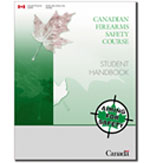
The course through which this training is provided is the Canadian Firearms
Safety/Hunter Education Program. The course consists of two parts. Part A, the Canadian Firearms Safety Course, is a national program developed by the federal and provincial governments, as well as hunter education organizations and instructors across Canada. It stresses the safe and responsible use of firearms and is a requirement under the Criminal Code of Canada to possess or acquire firearms.
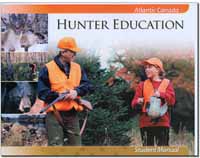
Part B, Hunter Education, is a provincial program developed in partnership between the four Atlantic Provinces. It covers hunting topics and focuses on the role that hunters play with respect to wildlife management and conservation.
Does this course cover the use of handguns?
No. The use of handguns and other restricted firearms is covered under a separate course - the Canadian Firearms Restricted Firearms Course. For further information, contact the New Brunswick Department of Public Safety.
What is the purpose of the Canadian Firearms Safety/Hunter Education Program?
Its purpose is to teach safe firearm and hunting practices.
Students are taught how to handle and use firearms in a safe and responsible manner. They are also taught safety from a non-firearm perspective, such as how to minimize the risk of hypothermia while hunting, what to do if you become lost, and tree stand safety practices.
The course also exposes students to a wealth of hunting information including hunter ethics, basic field techniques, wildlife identification, and the role of hunting with respect to wildlife management.
Course topics
Specific topics include:
| Canadian Firearms Safety (Part A) | Hunter Education (Part B) |
|
|
|
How is the Canadian Firearms Safety/Hunter Education course taught?
In New Brunswick, there are three options for obtaining certification under the Canadian Firearms Safety/Hunter Education Program.
| (1) | Traditional classroom instruction: the classroom course is taught by Department of Natural Resources staff, with assistance from dedicated volunteer instructors. Courses are offered based on student demand and instructor availability with most courses held in the fall and winter months. A typical course consists of 16 hours of instruction and is delivered in 5 to 6 evening sessions scheduled over a couple of weeks. If you would like further information about the classroom option, please contact your local Department of Natural Resources office or visit the provincial Fish and Wildlife web site. |
| (2) | Home study option: you may purchase the course materials in printed form or obtain them for free online and study in the convenience of your own home. Upon completion of the study materials you register for and take the Canadian Firearms Safety (Part A) and Hunter Education (Part B) exams. Students must provide their completed assignments to DNR staff for evaluation at the time of testing to qualify as a home study participant. If you are interested in learning more about the home study option, continue with this site. |
| (3) | Challenge option: you may also opt to challenge the Canadian Firearms Safety Course exam. For further information on challenging the Canadian Firearms Safety Course, contact your local Department of Natural Resources office. There is no challenge option for the Hunter Education Course (Part B). |
Age Requirements and New Brunswick Hunter Education Training
You must be at least 11 years of age to participate in the classroom version of the Canadian Firearms Safety/Hunter Education Program. The minimum age for doing the home study option or to challenge the Canadian Firearms Safety Course is 18 years.
Course fees
Costs for the Firearm Safety/Hunter Education courses are summarized below.
The fees do not include the cost of the course manuals, which are $10.00 each plus GST for the Canadian Firearms Safety Course (Part A) and the Atlantic Provinces Hunter Education (Part B) student manuals.
Firearms Safety/Hunter Education Course Fees 1
| Classroom | Cost | |
| Course | 13 to 16 years of age | 17 years and older |
| Firearms Safety (Part A) | $ 40.00 | $ 65.00 |
| Hunter Education (Part B) | $ 40.00 | $ 65.00 |
| Firearms Safety/Hunter Education (Parts A and B) | $ 40.00 | $ 95.00 |
| Home study | Cost | |
| option2 | 18 years and older |
| Firearms Safety (Part A) | $ 40.00 | |
| Hunter Education (Part B) | $ 40.00 | |
| Firearms Safety/Hunter Education (Parts A and B) | $ 65.00 |
| Challenge | Cost | |
| option | 18 years and older |
| Firearms Safety Challenge (Part A) | $ 40.00 |